DECKING
Pressure Treated Lumber

Product Information:
Pressure treatment preserves wood’s structural soundness and
significantly extends it’s service life by protecting it from
natural predators. Coming from a renewable resource, wood is a plentiful
and economical building material; however, it can be subject to attack
from insects, micro-organisms, and decay-causing fungi. Untreated
wood in contact with the ground or water may last from one to four
years; whereas, pressure-treated wood can last decades in these conditions.
Standard Application:
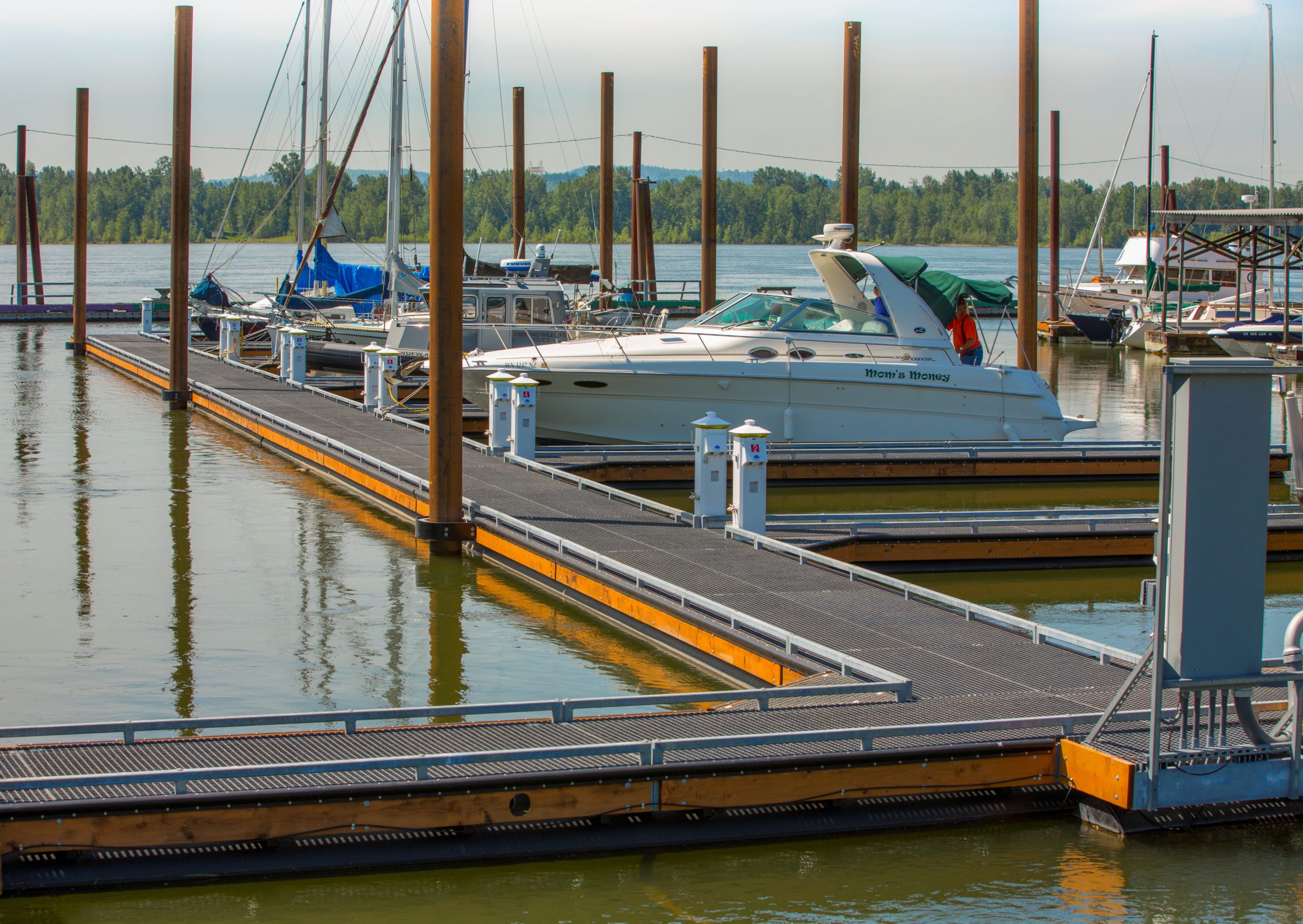
Experience has shown that wood is one of the best materials for construction
in and around aquatic environments. It is resilient enough to
withstand battering by the ocean and ships, yet naturally resistant
to the destructive forces of salt water. Wood doesn’t rust
and is significantly less affected by corrosion than are other
materials. With its additional benefits of protection against
decay-causing fungi and local wood destroying marine organisms,
properly treated wood assures safe, decay-resistant, long-life
performance in both fresh and saltwater installations.
Restrictions:
Certain environmental restricted lakes, streams and estuaries which
don’t allow pressure treated wood.
Options:
Cedar, Fiberglass, Steel, HDPE Plastic, or Composite Decking.
Cedar

Product Information:
Western Red Cedar contains natural oils that act as preservatives
to help the wood resist insect attack and decay. Cedar is also
a dimensionally stable wood that lies flat and stays straight.
Properly finished and maintained, Western Red Cedar ages gracefully
and endures for many years.
Standard Application:
Cedar is the preferred material for all outdoor applications that
seek stability and durability: from cross beams to the decking
on floats.
Restrictions:
Heavy duty structural requirements.
Options:
Steel, Fiberglass, Pressure Treated & Composite Decking.
Fiberglass Decking

Pultruded & Molded
Product Information:
Pultruded grating is designed for use in
a wide range of applications. Floats that require light penetration,
strength, and corrosion resistance.
Molded grating is designed to provide the ultimate in reliable performance. This advanced grating is proven superior in applications requiring bidirectional strength, corrosion resistance and a long maintenance-free life. Available in either standard concave or optional grit-top walking surfaces, molded fiberglass grating offers outstanding skid-resistance for added safety in marina or personal float applications.

Features
- Corrosion Resistant
- Structurally Strong
- High Impact and Fatigue Strength
- Lightweight
- Low Maintenance
- Low Conductivity
- Aesthetically Pleasing Appearance
- Skid Resistant
- Rigid
- Low Thermal Conductivity
- Fire Retardant
Standard Application:
Molded rectangular or square mesh grating often used for walkways
on floats for light penetration requirements. Pultruded I-BAR
grating available with a gritted surface for applications that
require maximum traction. Used also for trench covers in many
industrial applications. Helps diminish and minimize build up
of snow, ice, and other debris.
Restrictions:
Pressure Treated Lumber, Cedar, or Composite Decking is less expensive.
Options:
Decking with lumber in conjunction with fiberglass will reduce cost
yet still provide light penetration requirements.
High Density Polyethylene

ThruFlow™ is designed to be the finished walkway for a dock, deck, patio, or any outside or inside flooring structure. It is also designed to be used in conjunction with metal, wood, aluminum or other similar substructures. The ThruFlow™ interlocking flooring system is ideal for docks due to it’s water resistance and anti-slip surface. Also, ThruFlow’s sunlight and water penetration proper ties in concert help to keep vegetation alive, minimizing the effects of your walking surface on the environment.
Steel/Aluminum Grating

Product Information:
Aluminum grating is corrosion resistant,
non-rusting and filely maintenance free. Skid resistant walking
surface, plank grating provides a lightweight product with exceptional
durability.
Steel grating is most popular of all the grating types due to its strength.

Standard Applications:
Surfaces and float decking that require Heavy duty strength, maximum
light penetration and skid resistance. Regions where ice and
snow build up are a concern.
Restrictions:
When considering steel or aluminum, steel is
high on maintenance, and much heavier than other types of grating. Aluminum, although
lighter in weight, the cost of these types of products is higher
than other types of grating.
Option:
Fiberglass or High Density Polyethylene Decking.
Composite Decking

Product Information:
Composite decking is a manufactured process utilizing recycled wood
fibers and a blend of low and high density recycled polyethylene
plastic giving the best qualities of both materials. The plastic
shields the wood form moisture, and the wood protects the plastic
from UV damage and gives the deck a sold, natural feel. It has
the unique anti-slip textured surface designed to provide excellent
traction.
Standard Application:
Used for residential or commercial decking on floats and walkways.
Composite decking is filely impervious to moisture and does
not require pressure treatment, preservative treatments, water
sealing or staining. Board width is 6” wide 8’, 10’,
12’ & 20’ long and must be supported by joists
16” on center.
Restrictions:
Can not be used for structural support purposes.
Options:
Pressure Treated or Cedar support Beams.